
Life Begins
The Earth has an ocean, but the planet is still a far cry from the version of our home that we know and love. On the surface, it has a thick, stormy, and poisonous atmosphere of mostly carbon dioxide. Deep beneath the ocean, there are many submarine volcanoes and hydrothermal vents spewing a constant stream of chemical riches from deep within the Earth.
The story here is extremely mysterious, but here is a version as I understand it.
Likely within one of these hydrothermal vents, something very new and interesting happens. As chemically rich water passes through the pores of rock or clay, a series of molecular miracles occurs. In the chemical concoction, hydrogen, carbon, nitrogen, oxygen, and phosphorus atoms arrange themselves into all sorts of new and complicated shapes…

Somehow in this dance, lots of a particular four molecules are produced that react with one another, linking up to form long chains like stings of beads. We call these particular molecular strings RNA.

The beads on the string repel and attract one another, twisting and tangling it like balls of yarn or those headphones in your pocket (back when headphones still had cords). Millions of theses molecules of all shapes and sizes come together and fall apart in that dark vent, constantly jostling each other and making new combinations for millennia. After enough random iterations, a particular molecule gets tangled up in such a way that it can grab ahold of and help fold or assemble other strings into its own twisted shape. These are molecules that can make more of themselves, and this perpetuating cycle becomes the basis of life.

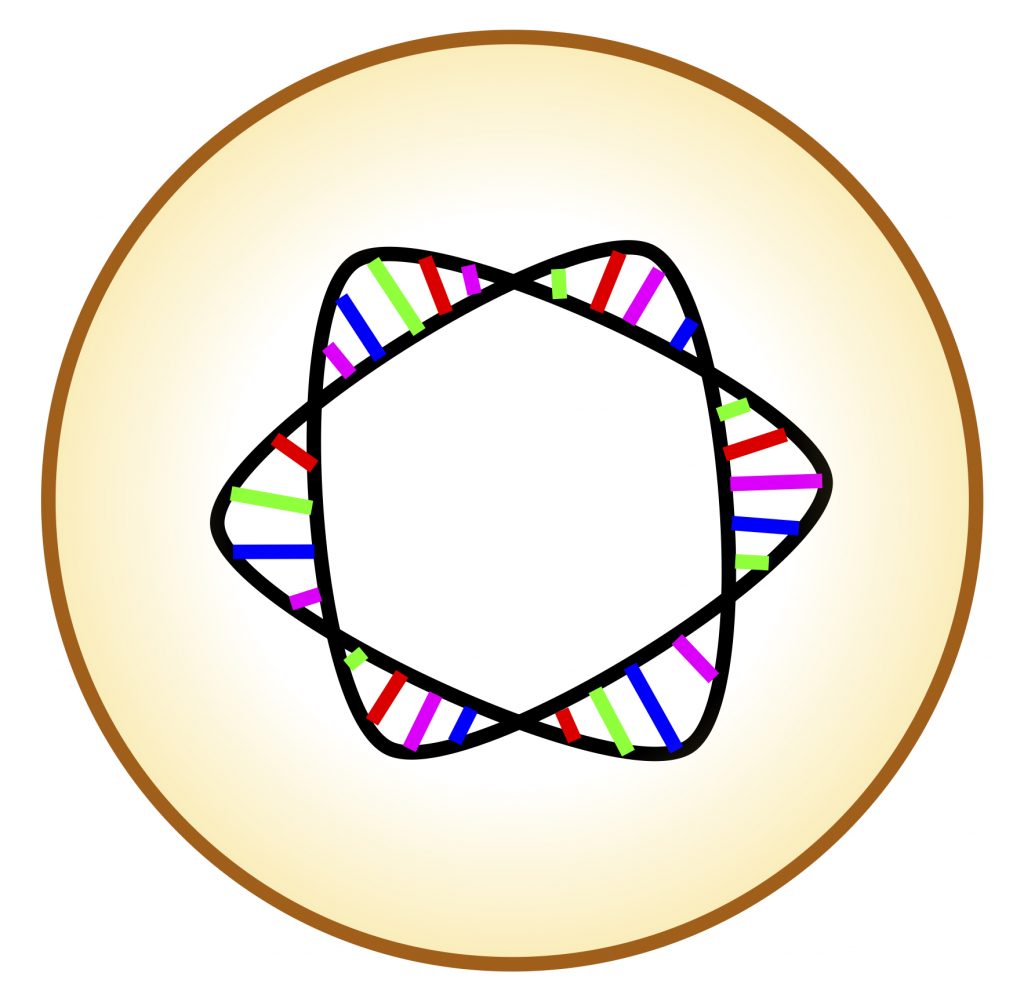
RNA of a Ribosome flattened out[2]


Along the way, this magic potion of dancing molecules get trapped in small oily bubbles, protecting it, and keeping the conditions just right for the miracles happening inside. Over thousands of years, the gangly molecules diversify into myriads of molecular machines, each honed to do a specific task within the cell, like gathering materials, assembling more machines, or dividing the bubbles in two whenever they grow too big. These are the first cells, and they spread like wildfire.
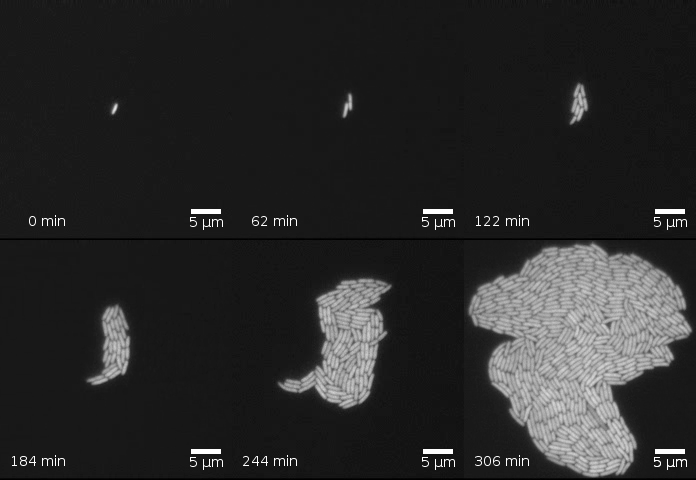
One becomes two. Two becomes four. In twenty rounds of division you have over a million individuals. In twenty-one rounds you have two million… Living cells soon exist all around the globe.
As the process of life continues, evolves, and grows more complex, RNA is joined by DNA and proteins. DNA, its double helix being more stable and less tangly than RNA, takes over the job of recording information, creating a library with all the instructions and blueprints for everything that happens in a cell. Proteins, another kind of molecular bead string, take over the fabrication jobs like construction and alchemy. They too fold up into complex tangles but are tighter, stronger, and more diverse because they are made of 20 different kinds of smaller beads compared to the larger four that make up RNA and DNA. They mostly replace RNA as the molecular machines that carry out the happenings of a cell.
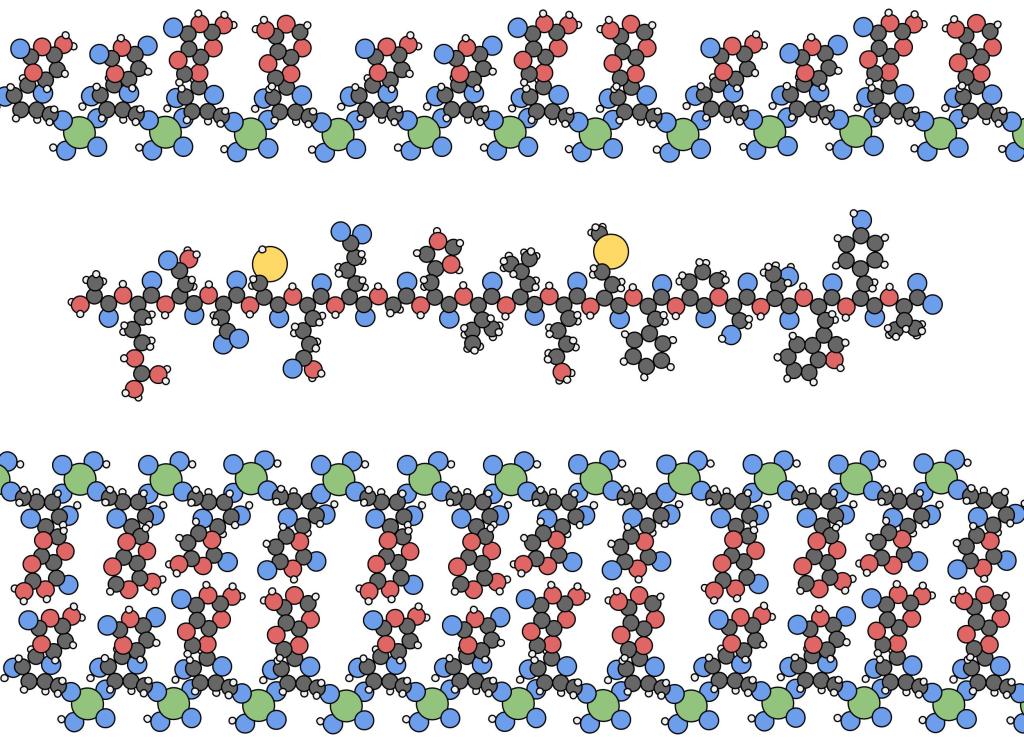
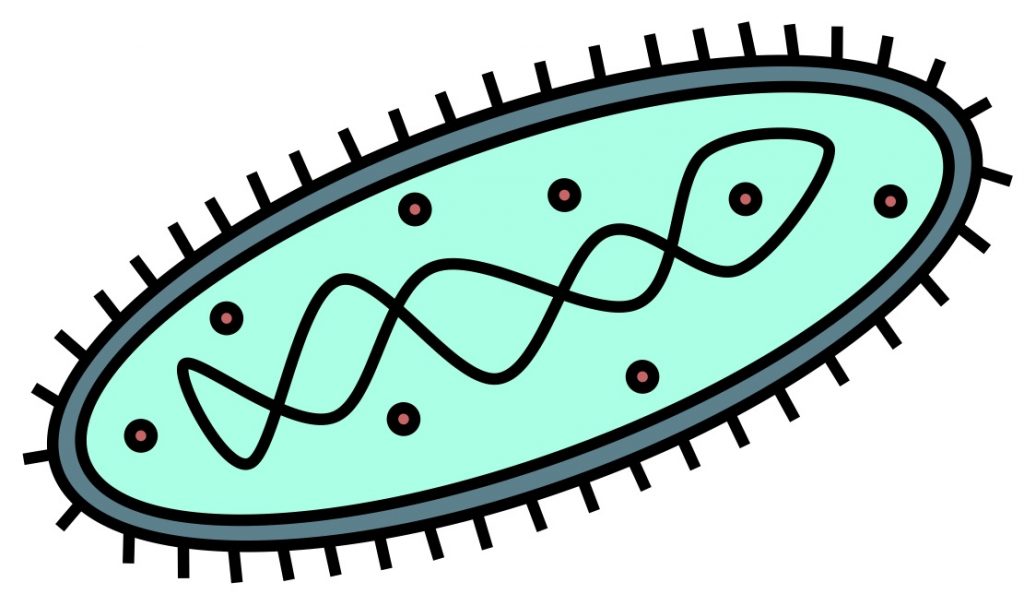
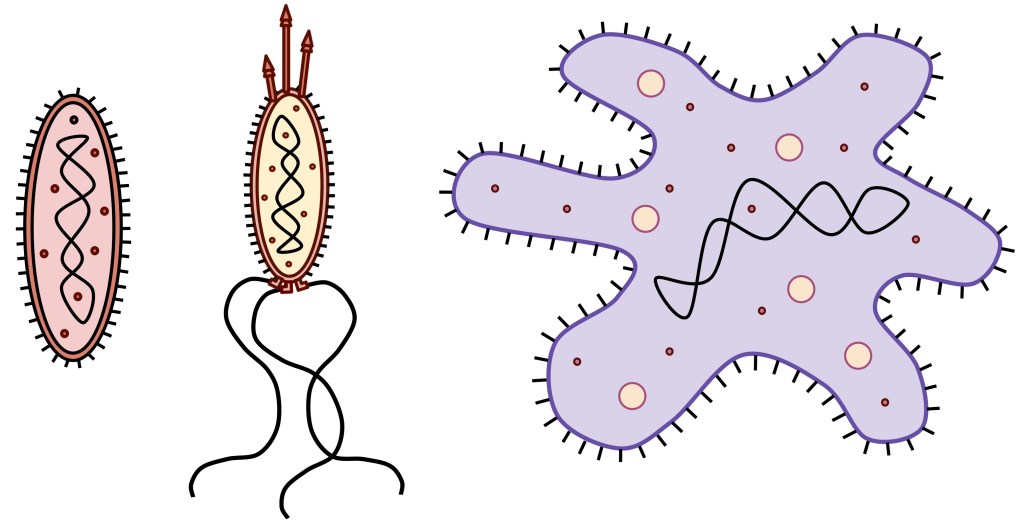
After millions of years of evolution, these biochemical symphonies are honed into perfect, packaged organisms, the summation of millions of atomic constructs carrying out tiny tasks in concert. They look something like this.

These were the first bacteria. By sheer numbers, the vast majority of the lifeforms on the planet are still bacteria. They live everywhere on Earth: in the ocean, rivers, and streams, on you skin, and inside your gut. They live in the air and in every individual water droplet in the clouds. They even live within rock itself; many exist kilometers underneath the surface of the earth.
These first bacteria must make a living in the chemically rich oceans from which they arose. Despite being so seemingly simple, these little beings are incredibly clever. They are chemolithotrophs, chemical and rock eaters, professional alchemists leveraging the balance between energy and entropy to perform chemical reactions and glean the excess energy for themselves. They diversify and specialize to particular chemical jobs and soon learn to squeeze energy form every conceivable source. They feed off of hydrogen, sulfur, iron, ammonia, and methane, whatever molecules they can find, and produce other compounds in turn. No one bacterium is capable of much of an impact, but there are trillions and trillions. Having harnessed these reactions, the swarms of tiny alchemists set about subtly changing the world around them.
Life goes Solar
Soon, these little alchemists saturate the planet with their tiny shenanigans. Busy turning this into that and that into the other thing, they are limited by the supply of energy that Earth provides them. They crowd and jostle at every trickle of chemically rich water leeching from within the Earth, or patiently wait out in the open ocean, hoping that the necessary components will float on by. Either way, life reaches a limit, but of course limits can be transcended.
There is a yet untapped energy source, the energy of the Sun. This energy is only known to the bacteria that happen to live in shallow, sunlit waters. However, to those blind beings, it begins as a nuisance. The Sun’s photons occasionally blast apart their DNA, making sunny waters a dangerous place for life. However, the clever bacteria make special molecules to adapt to the barrage of photons and, in doing so, invent something amazing: the solar-powered machine.
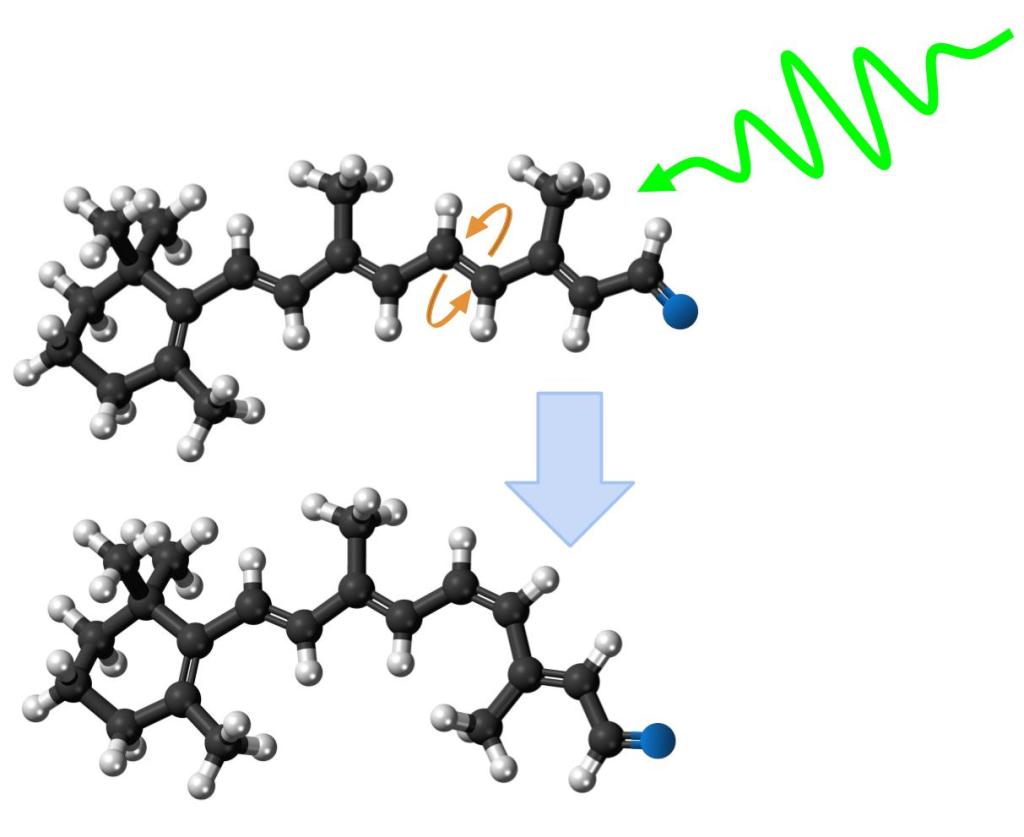
Their first crack at it is very simple; they create a molecule out of carbon, hydrogen, and a single oxygen atom that changes shape when hit by a photon of the right color. (They absorb green, so these bacteria appear purple.) They figure out how to harness the mechanical energy of this shape change to power the cell. Thus the first light-eating organisms, the phototrophs, are born.

Interestingly, they passed down this knowledge to their ancestors, and the very same shape-changing molecule, retinal (a.k.a “vitamin A”), is being used by the cells in your eye to see! Instead of driving your metabolism, the shape-change triggers a cascade of activity that results in a neuron firing a signal to your brain.
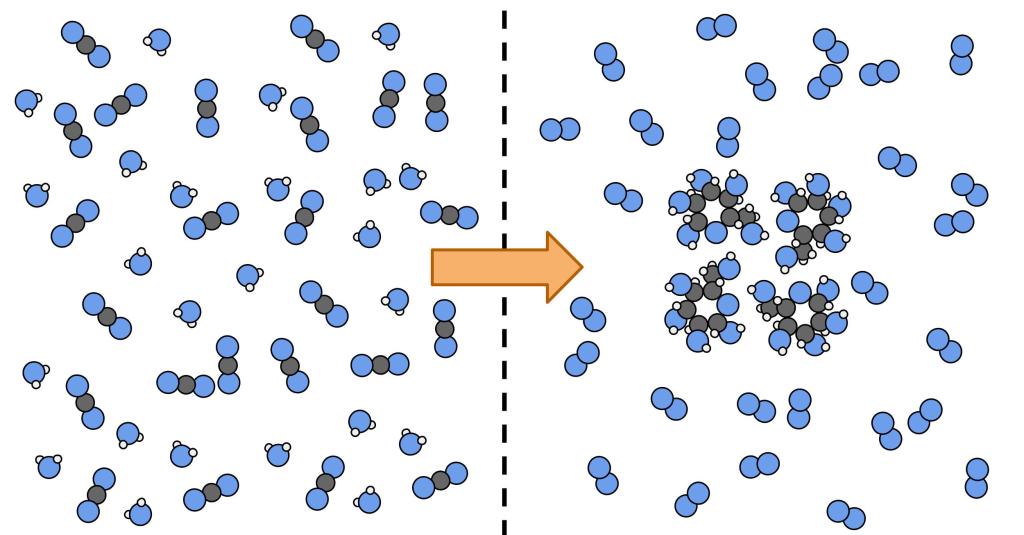
The second big crack at solar power is even more amazing. This time, a particular family of bacteria invent a different molecule called chlorophyl that, when hit by the right color of light, (this time red or blue, hence the green appearance) shoots off an electron. They then harness the power of this electron to break apart water and carbon dioxide. They use the carbon, hydrogen, and some oxygen to sculpt more of themselves, and release the excess oxygen out into the environment. Just like that, these beings can create themselves out of nothing but water, light, and air. These are the Cyanobacteria. They become the foundation of life on Earth.
The Cyanobacteria come to live in all sorts of environments. Many are free floating tiny green specks in the ocean; some live protected inside grains of sand; and others live linked together in great linear colonies like beads on a string.

These strings weave and tangle together, forming mats which become home to all sorts of other tiny lifeforms. Together these communities form a network of relationships making them resilient bastions of life, capable of colonizing the harshest environments.

Some species of cyanobacteria secrete limestone structures building up chunky bacterial versions of coral reefs called stromatolites. These stoney colonies become widespread in shallow waters around the world.
We find fossils of stromatolites more than 3.5 billion years later, and some are still alive today!

The Oxygen Crisis
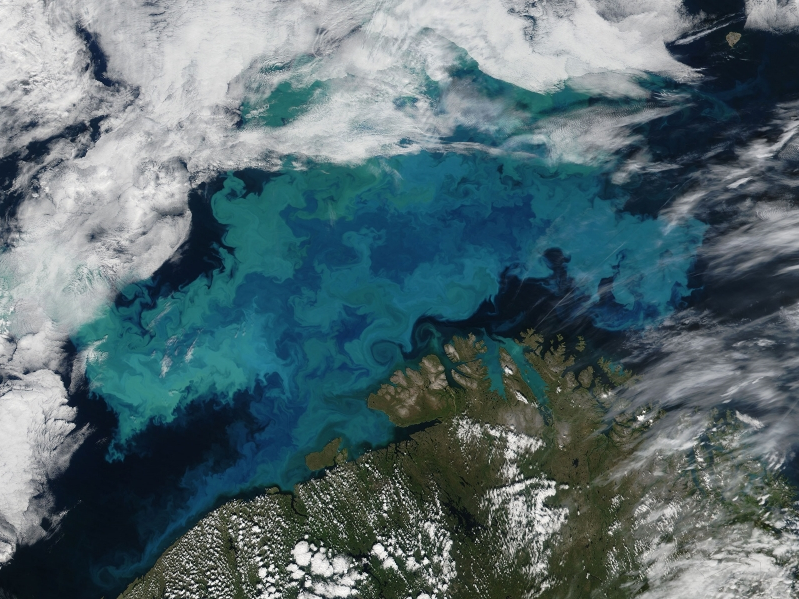
With the rise of cyanobacteria, the limits on life are lifted. No longer totally reliant on nutrients seeping out of the deep, life can exist anywhere the sun shines, and, before long, it does. The ocean blooms, turning blue-green with the tinge of trillions of these tiny, green beings.
The cyanobacteria become so abundant and productive that the reactive waste oxygen they produce becomes significant on the global scale. This changes the environment too quickly for many species to adapt and results in their demise. Thus, this bead is the first of many mass extinctions.
At first, the oxygen produced by the cyanobacteria quickly combines with iron dissolved in the ocean to form rust, which sinks and settles on the bottom. Soon, the cyanobacteria become so numerous that thick layers of rust built up on the ocean floor all over the planet.
In some of the oldest rocks left on Earth today, we can still see the remnants of this time: layers of black and red iron deposited by the seasonal blooming of Cyanobacteria so long ago.

Eventually, the cyanobacteria saturate the ocean to the point that it can’t absorb any more oxygen, so the gas begins to escape into the air, forever changing our atmosphere. By simultaneously drawing down carbon dioxide and releasing oxygen, these tiny beings change the warm, insulating effect of the sky so drastically that the world plunges into the most extreme ice age to ever happen on Earth. The ocean freezes over for millions of years, and the activity of life effectively pauses, continuing only in slow motion under the ice.

Today we find the rocks that date to this era scraped and sculpted by glaciers, even those that should have been on the equator so long ago.
Fortunately for life, our tectonic mother continues her volcanic activity regardless of the ice and cold. Sub-glacial volcanoes belch carbon dioxide from the underworld back into the atmosphere, gradually rewrapping the planet in a warm blanket.
Eventually, the equator warms just enough to melt the bright sea ice and expose the dark ocean below. The waters warm in the sunshine, melting more and more ice until the world quite suddenly thaws. Earth becomes surprisingly hot in the aftermath, because it is still wearing such a warm atmospheric sweater. This causes life to go into overdrive, and a living revolution soon follows.
Eukaryotes
The extreme pressures brought about by the cyanobacteria force the rest of life to adapt and find novel ways to survive. Nature finds a balance in spite of the oxygen apocalypse as some bacterial beings figure out how to use the poisonous oxygen for their own energy production and thus stabilize the atmosphere. Some bacteria figure out how to build tiny harpoons to spear material or other cells around them. Others unlock the unusual power of shapeshifting.
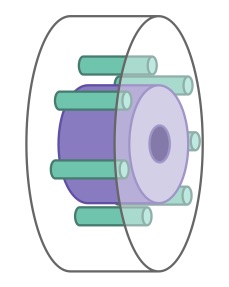
The shapeshifters find ways to grow bigger than the rest of the bacteria and take to engulfing other cells, swallowing them whole and digesting them. These hunting amoeboids give rise to the eukaryotes, predatory blobs monsters in the micro world. The blob-creatures quickly find that it is important for them to use their shapeshifting capabilities to protect their DNA, because their swallowed prey could still be struggling to escape and damage it while in the belly of the beast. Over generations, they discover the strategy of consolidating their DNA to a central compartment, which gives rise to the nucleus.
The shapeshifters find ways to grow bigger than the rest of the bacteria and take to engulfing other cells, swallowing them whole and digesting them. These hunting amoeboids give rise to the eukaryotes, predatory blobs monsters in the micro world. The blob-creatures quickly find that it is important for them to use their shapeshifting capabilities to protect their DNA from prey still struggling to escape from within the belly of the beast. Over generations, they discover the strategy of consolidating their DNA to a central compartment, which gives rise to the nucleus.
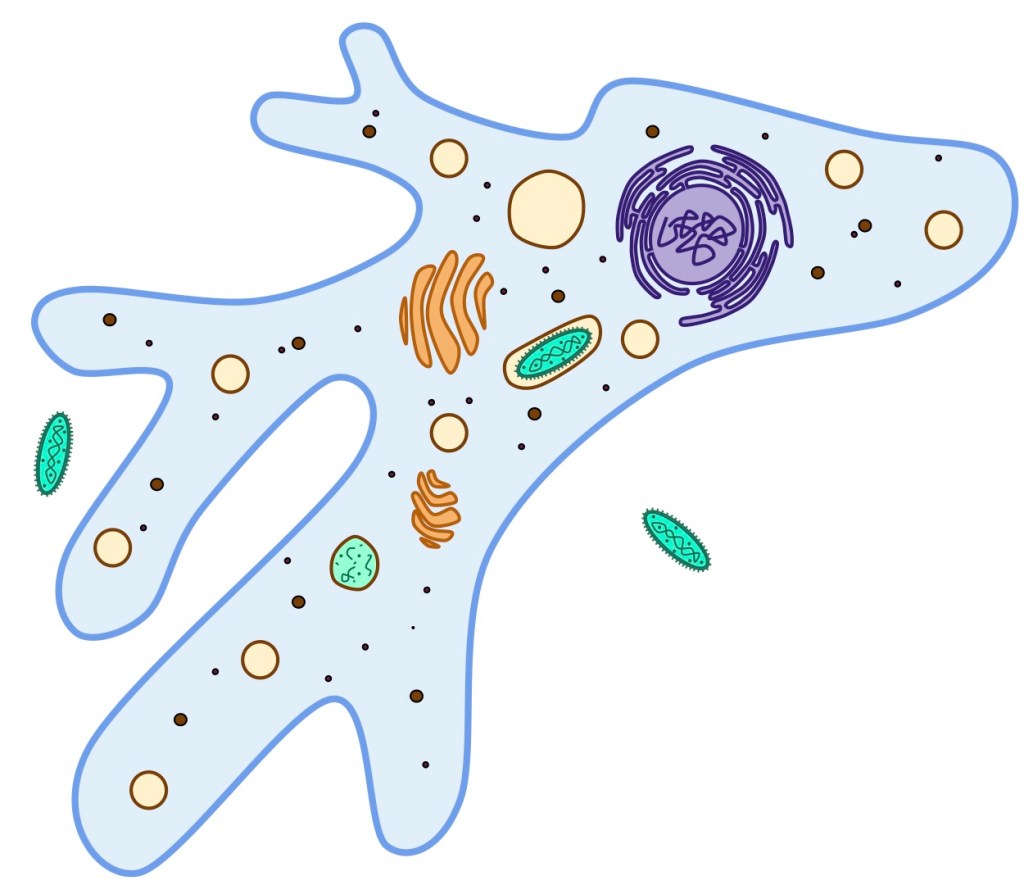
The nucleus is an organized central library for sorting and storing important documents and instructions, whereas the rest of the cell becomes a messy workshop full of tools and compartments for putting things together or tearing them apart. This separation allows for the new eukaryotes ( Eu = good/true, karyon = nut/kernel ) to achieve complexity unimaginable to the beings without a nucleus, the prokaryotes ( Pro = before, karyon = nut/kernel ). This new genre of life form wanders the world, quietly hunting bacteria and honing the new skills brought about by their more complicated composition.
New Superpowers
At some point, a eukaryotic blob creature is hunting bacteria and swallows a particular bacterium but, for some reason, does not digest its prey. The bacterium is of the type that can produce energy from oxygen and can hardly care less about being swallowed. It continues on its happy way producing energy from oxygen inside of the larger cell.
The little bacterium leaks a bit and donates some of the food it produces to its new host, and the host does not eat the bacterium but instead protects it from the other hunters of the outside world. Thus, a very beneficial relationship is born. The bacterium multiplies inside the larger cell, and, when the larger cell is ready to divide, some end up on either side. The happy duo continue to live and evolve together for the rest of time.
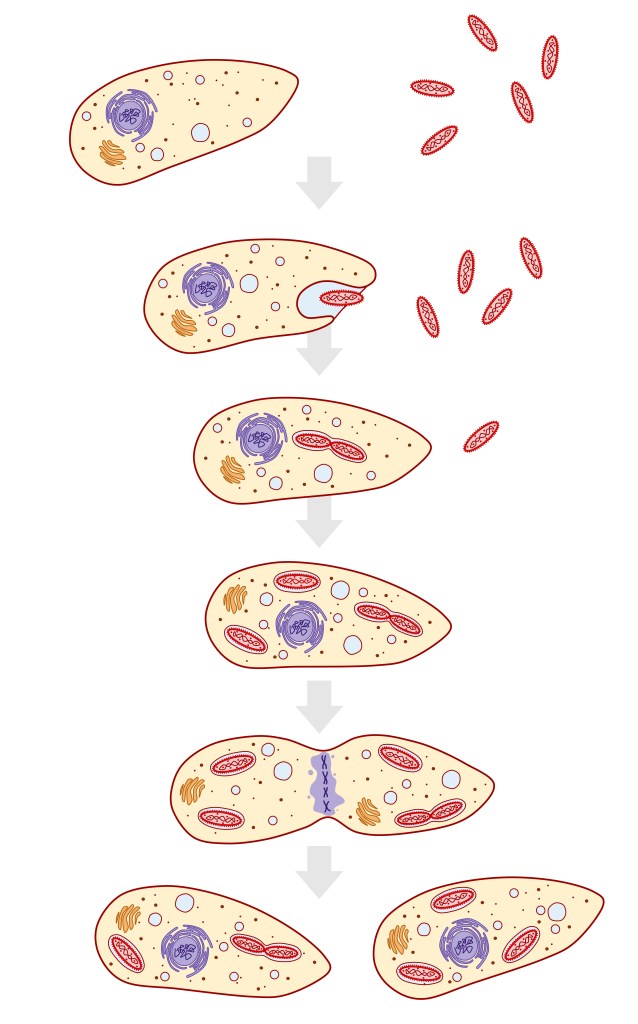
These internal bacteria became the mitochondria that exist in every one of your cells. They are the powerhouse of the cell, the bit that uses oxygen from your lungs to make energy for your body. Our single-cellular ancestors gained this superpower, the very ability to breathe, directly from bacteria.
Now, supercharged by little oxygen burning engines, the eukaryotes spread all across the globe. At some point, in another strange dinner scenario, a eukaryote eats a cyanobacterium, one of its favorite foods, but again fails to digest it. The cyanobacterium keeps chugging away at photosynthesis, and again, as long as its guest is paying rent, the host lets it stay right along with all of its new mitochondria. They evolve together and the chloroplast is born, this time giving eukaryotes the power of photosynthesis, the ability to craft themselves out of light and air.

The eukaryotes, having gained the magic powers of photosynthesis, eventually give rise to plants. The mightiest trees today are in essence a magnificent home for the tiny and ancient cyanobacteria that make their existence possible.

The Protist Jungle
With their new superpowers, the eukaryotes explode into a diversity of lifeforms. Their advanced architecture allows them to experiment with all sorts of new strategies and structures. Some build tiny tentacles to help them swim faster than ever; some create long, poisonous spines and wait for unwitting prey to wander into their trap; some decide to take root and use long stalks to reach into the current to filter the water for food; and some even figure out how to make rudimentary eyes to help them search for sunlight.
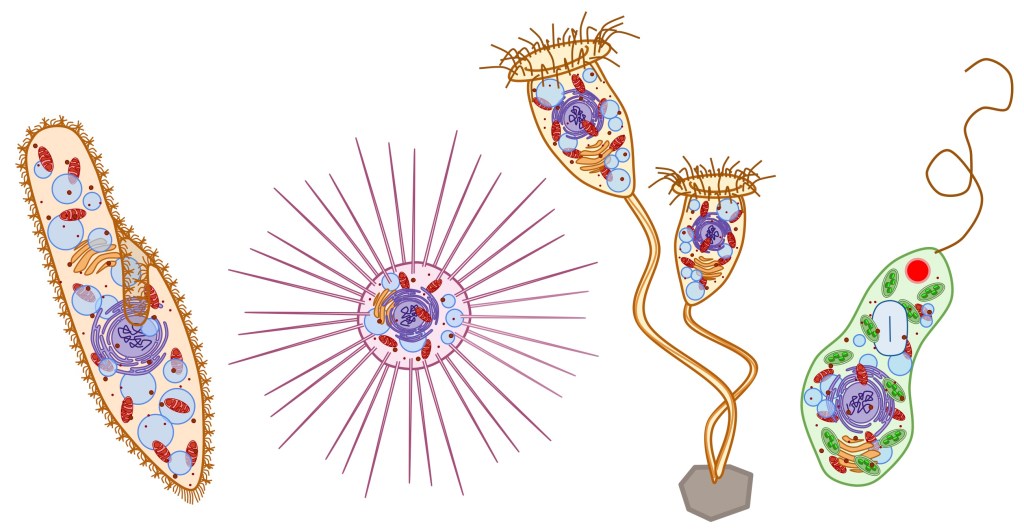
They wander their world, hunt prey, evade predators, build structures, and court mates, all the time making decisions. Despite being such relatively tiny beasts, they have nearly all the lively characteristics of an animal.

Lacrymaria Olor snatching up prey[8]
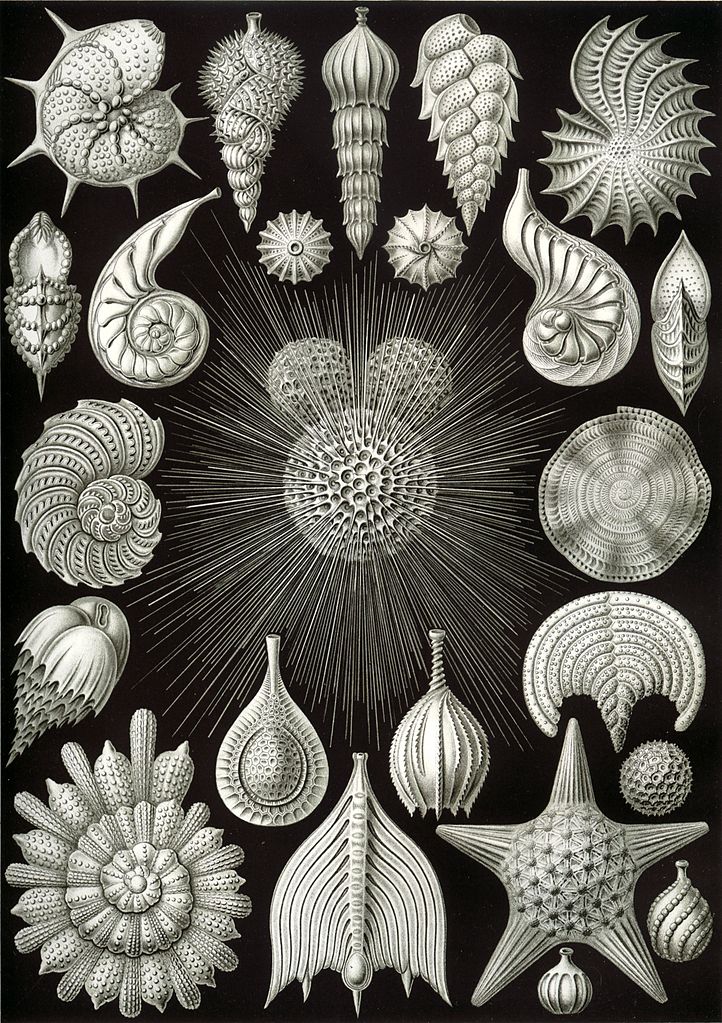
As the wet places of the world become increasingly populated with these small critters, some protists get better and better at preying upon others, becoming top predators amongst the creatures grazing on bacteria or basking in photosynthetic sunlight. As defense, some of the prey construct ornate little shells, and others grow to enormous sizes.
Multicellularity
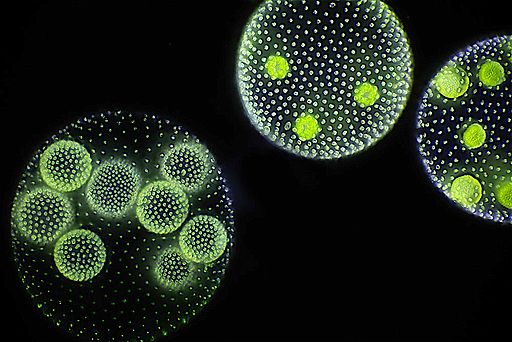
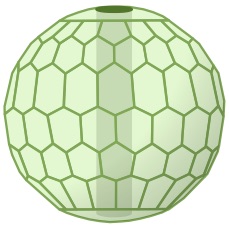
As another defense against the voracious predators of the micro world, some creatures start banding together in large colonies. This in itself is not new; bacteria have been forming enormous colonies for eons, but, until now, colonies were not much more than a collection of identical individuals sticking together for safety.
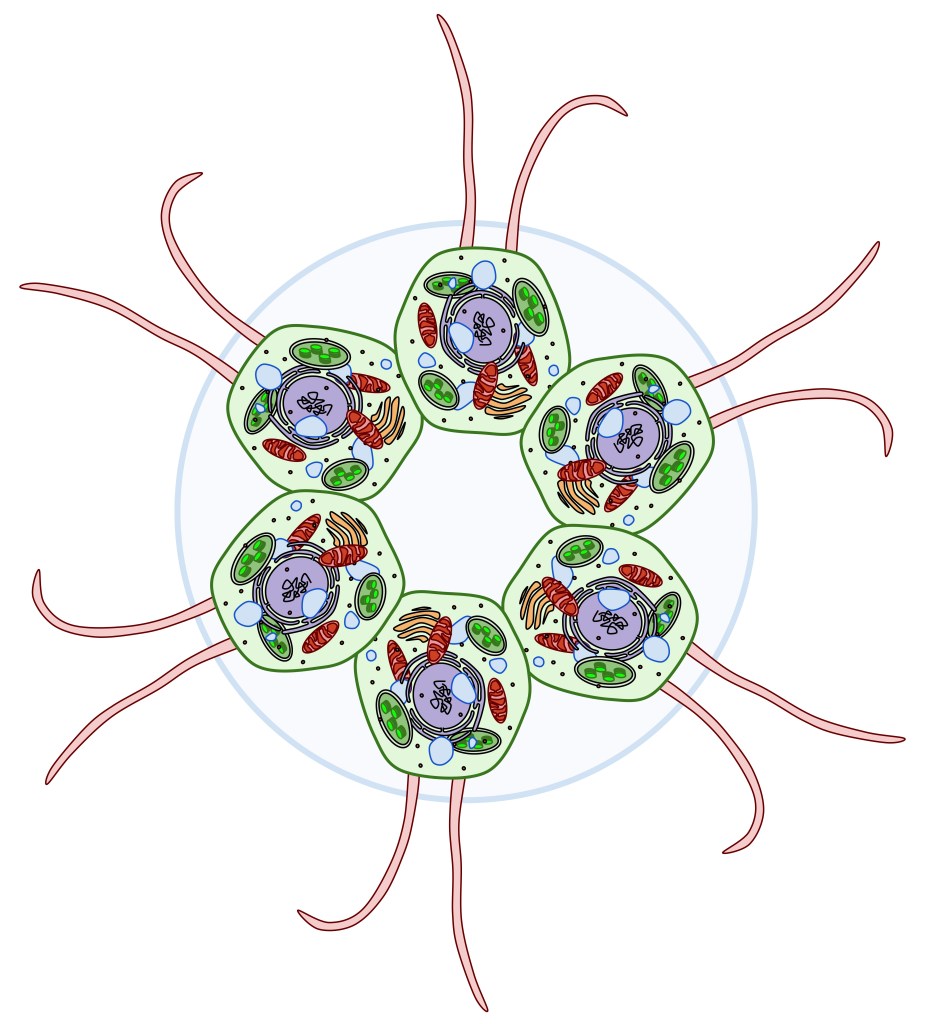
Around this time, the clever eukaryotes form a new kind of colony that reaches even greater levels of cooperation and interdependence. Cells begin to specialize into either body cells or reproductive cells, sacrificing individual abilities for the good of the whole. The body cells sacrifice the ability to create new colonies on their own, and instead focus their lives on protecting and feeding their colony. The reproductive cells sacrifice the ability to feed themselves, and instead devote their energy to giving birth to the next generation. With the reproductive cells unable to survive without the body cells and the body cells unable to continue the species, they become totally dependent on one another. Together, they are no longer a collection of individuals but a single entity made of many cells inextricably tied together, giving rise to the first multicellular organisms.

Over time, these colonies become more complex. The body cells of the organisms branch into several specialized types, resulting in far more capable creatures. Algae, more like the seaweed we’re familiar with, develop distinct parts that begin to resemble roots and leaves for holding on to the rock or reaching for the sun while swaying in the sea current.
Despite being such a monumental transition, all we have to show for it today are vague fossils of seaweed. They were the only beings to grow so large and firm to leave a recognizable trace over a billion years later. Although our record is limited, we can infer that there were many forms of life trying out this mode of multicellularity in a diversity of shapes and sizes.
The story of these adventurous colonies continues here.